Revive Your Database with Legitimate Interest

If your communications are only reaching a small fraction of your past bookers, you're not alone. Many arts organisations have large databases, yet often speak to only a small, consented portion of them. This guide walks you through how to assess your database, make the case for legitimate interest, and implement it effectively within your organisation and your ticketing system.

If your communications are only reaching a small fraction of your past bookers, you're not alone. Many arts organisations have large databases, yet often speak to only a small, consented portion of them.

That’s where legitimate interest comes in.

When used strategically and ethically, legitimate interest allows you to reconnect with past audiences in a GDPR-compliant way. It’s an approach that opens up significant potential, expanding your reach, reactivating lapsed customers, and increasing engagement over time.

This guide walks you through how to assess your database, make the case for legitimate interest, and implement it effectively within your organisation and your ticketing system.

Start with a Database Audit

Before you decide who to contact or how, it’s vital to understand what you’re working with.

Ask these key questions:

  • How many people have booked with us previously? This defines your total available contact base.
  • What percentage have full GDPR opt-in consent? Many organisations find that only around 20% do.
  • What channels do we have permission to use...email, phone, post? Segment accordingly.
  • How many customers booked once versus multiple times? Loyal bookers may be your best audience to reconnect with first.

Without a clear audit, your active marketing pool may be far smaller than it needs to be. But with legitimate interest, you can ethically expand who you speak to.

Understand What Legitimate Interest Means

Legitimate interest is one of six lawful bases for processing personal data under GDPR. It allows you to communicate with individuals after they’ve made a purchase, provided you meet a few key criteria.

You can use legitimate interest if:

  • The customer voluntarily provided their contact details when booking.
  • Your communications are relevant to previous activity (e.g. similar shows or events).
  • There is always a clear and easy opt-out in every message.
  • Contact data is never sold or shared without explicit consent.

Far from being a grey area, this approach (when done right) is well within your legal rights and can be a powerful part of a wider engagement strategy.

Want to learn more about our platform?

Follow a Clear, Documented Process

To use legitimate interest responsibly and confidently, follow this structured, step-by-step approach:

Build Your Legitimate Interest Case
  • Why is this necessary for your organisation’s goals?
  • Is it proportionate and fair?
  • Could you reasonably achieve your aims another way?
Conduct a Balancing Test

Weigh your organisation’s interest in contacting patrons against their privacy rights. Take extra care to minimise any potential intrusion.

Put Safeguards in Place
  • Use segmentation and personalisation to ensure communications are relevant.
  • Include opt-outs at every step.
  • Avoid excessive or generic messaging.
Document Everything

Keep a record of your rationale, analysis, and the decisions you made. This is vital in case of future scrutiny and shows due diligence.

Update Policies and Train Staff
  • Ensure your privacy policy clearly outlines the use of legitimate interest.
  • Make sure your teams understand the approach and how to communicate it.

Templates for each step are available, thanks to Katy Raines of Indigo Ltd.

Legitimate Interest in Ticketsolve

Using legitimate interest within Ticketsolve is straightforward and flexible.

Implementation steps:

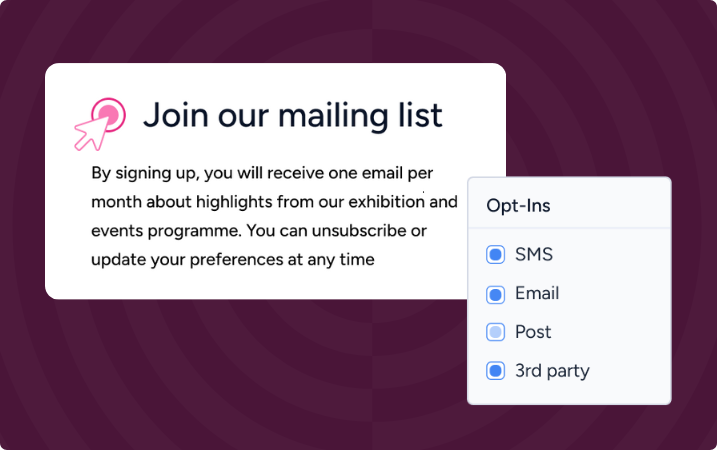
  • Set up clear opt-in messaging across the booking journey: online, mobile, and at the box office.
  • Upload your updated privacy policy directly in the Ticketsolve dashboard.
  • Set customer email preferences to opt-in by default, while keeping manual opt-out options easily accessible.
  • Use reporting tools to monitor trends, measure engagement, and identify reactivation opportunities.

Need help? The Ticketsolve Help Centre has detailed Zendesk articles on setup, segmentation, and reporting, or just reach out to our team.

Real-World Impact: What Others Have Achieved

An Táin Arts Centre

By implementing legitimate interest, An Táin increased email subscribers by 400% in just four weeks, compared to 3% growth over the previous year. Importantly, there was no increase in opt-outs, showing that relevant communication is welcomed.

Mermaid Arts Centre

Mermaid expanded its marketing database by 5% using existing customer data—without spending additional marketing budget. No increase in complaints was reported, and careful staff training ensured a smooth rollout.

Your audiences want to hear from you. With the right preparation and transparent communication, legitimate interest can help you speak to more of them, more effectively.

It’s not a shortcut: it’s a strategic approach. And for arts and culture organisations, where the relationship with your audience is based on shared values and trust, it can be an especially powerful tool.

Quote icon

Let's start something brilliant together

We’d love to show you how we can help you thrive.

No items found.

Download the Whitepaper

Download now

Explore more Whitepapers

Personalised Marketing: Simple Ways to Create Lasting Relationships

Personalisation isn’t just a nice-to-have, it’s a proven way to build meaningful relationships with your audiences. Whether you're a large venue with complex campaigns or a small team looking for quick wins, personalised marketing helps you cut through the noise. With a few simple strategies and the right tools, you can tailor your communications to the right people, at the right time, driving deeper engagement and smarter audience development. This guide offers actionable ways to bring personalisation into your marketing, from segmentation and automation to platform-wide consistency.

Website Accessibility: A Practical Guide for Arts Organisations

Website accessibility isn’t just a compliance checkbox, it’s a commitment to ensuring every member of your audience can engage with your content, access your services, and experience your programme without barriers. But accessibility can feel overwhelming, especially with evolving standards and limited resources. This guide, created in partnership with accessibility advisor Catherine Turner, is here to help you take meaningful steps, without pressure. It focuses on what’s possible, practical, and impactful for arts and culture organisations of all sizes.

Making First Impressions Count

Every first visit is a chance to make a lasting impression.Whether it’s a theatre-goer’s first night out at your venue, a family’s first museum trip, or a newcomer’s first festival experience, those first moments set the tone for how they’ll remember (and return to) your venue. Ticketsolve makes it simple to deliver a first-time experience that feels personal and professional, and is also effortless for your team and your audience alike. From the moment they book to the moment they walk back through your doors, you can use automation, tagging, scanning, and reporting to make every step both smooth and meaningful.