What Are OKRs and Why Do They Matter?

OKRs (Objectives and Key Results) are a goal-setting framework designed to bring strategic alignment across every level of an organisation, from leadership to individual team members. Rather than tracking every task or output, OKRs focus on outcomes: what success looks like and how you’ll know when you’ve achieved it. Each objective is paired with a small number of key results that are specific, measurable, and time-bound.

OKRs (Objectives and Key Results) are a goal-setting framework designed to bring strategic alignment across every level of an organisation, from leadership to individual team members.

Rather than tracking every task or output, OKRs focus on outcomes: what success looks like and how you’ll know when you’ve achieved it. Each objective is paired with a small number of key results that are specific, measurable, and time-bound.

The Benefits of OKRs

  1. Clarity and Alignment
    Everyone is working towards shared goals, with visibility across teams and functions.
  2. Ownership and Accountability
    Teams understand how their work contributes to organisational success, driving motivation and responsibility.
  3. Impact Over Activity
    OKRs reduce noise and highlight where effort creates the most value.

For arts and cultural organisations, where impact isn’t always measured in revenue alone, OKRs help balance mission and sustainability with transparency and momentum.

Build Objectives That Stretch and Inspire

Strong objectives are ambitious, directional, and motivating. They’re not a list of tasks, but a north star for your team.

What Makes a Good Objective?

  • Outcome-driven, not activity-based
  • Aligned to organisational strategy
  • Slightly uncomfortable: designed to stretch, not simply tick a box

Example:
Deliver a high-impact fundraising campaign that engages new and existing supporters.

Define Key Results That Keep You on Track

Each objective is supported by three to four key results. These should define what success looks like in clear, measurable terms.

If it doesn’t have a number, a deadline, or a binary outcome, it’s not a key result.

Example key results:

  • Launch the campaign in December
  • Raise £35,000 by April
  • Secure three gifts over £500
  • Send thank-you communications to all donors over £50

Key results keep teams focused and progress visible. They are not a list of actions, but the outcomes those actions are meant to drive.

Want to learn more about our platform?

Use OKRs Across All Levels

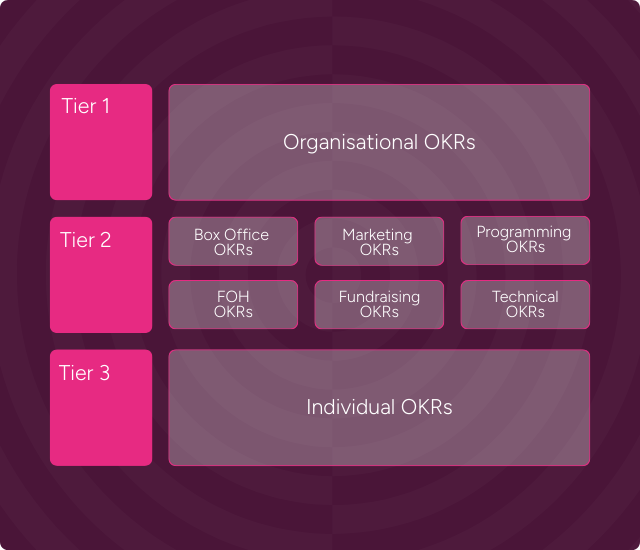
Effective OKRs cascade throughout your organisation, strategy to execution.

Three Tiers of OKRs

  • Organisational OKRs
    Set by leadership to define direction and long-term focus.
  • Team OKRs
    Shared across departments to align workstreams to wider goals.
  • Personal OKRs
    Define individual contributions and ensure every team member sees how their role connects to the big picture.

This structure supports transparency, alignment, and shared ownership at every level.

Track, Review, and Learn Continuously

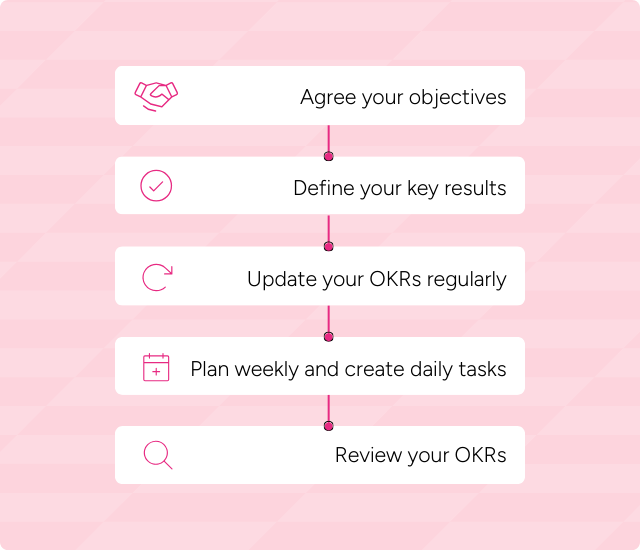
One of the most common OKR pitfalls is writing ambitious goals, and never revisiting them. Success lies in making OKRs part of everyday work, not a once-a-quarter ritual.

Build a Consistent OKR Cycle

  • Weekly check-ins to review progress
  • Team meetings to score key results
  • Dedicated quarterly reviews to reflect, learn, and improve

Example scoring:

  • 100% – Fully achieved
  • 70% – Strong progress
  • 50% – Some progress
  • Below 50% – Requires reflection

Don’t aim for perfect scores. If you’re hitting 100% consistently, your goals may not be ambitious enough. Use reviews to uncover what worked—and what should change next time.

OKRs as a Tool for Growth

OKRs aren’t just a planning exercise. When embedded properly, they create a culture of alignment, clarity, and ambition. They help you move faster in the right direction, and keep every department focused on the outcomes that matter most.

Quote icon

Let's start something brilliant together

We’d love to show you how we can help you thrive.

No items found.

Download the Whitepaper

Download now

Explore more Whitepapers

Personalised Marketing: Simple Ways to Create Lasting Relationships

Personalisation isn’t just a nice-to-have, it’s a proven way to build meaningful relationships with your audiences. Whether you're a large venue with complex campaigns or a small team looking for quick wins, personalised marketing helps you cut through the noise. With a few simple strategies and the right tools, you can tailor your communications to the right people, at the right time, driving deeper engagement and smarter audience development. This guide offers actionable ways to bring personalisation into your marketing, from segmentation and automation to platform-wide consistency.

Revive Your Database with Legitimate Interest

If your communications are only reaching a small fraction of your past bookers, you're not alone. Many arts organisations have large databases, yet often speak to only a small, consented portion of them. This guide walks you through how to assess your database, make the case for legitimate interest, and implement it effectively within your organisation and your ticketing system.

Website Accessibility: A Practical Guide for Arts Organisations

Website accessibility isn’t just a compliance checkbox, it’s a commitment to ensuring every member of your audience can engage with your content, access your services, and experience your programme without barriers. But accessibility can feel overwhelming, especially with evolving standards and limited resources. This guide, created in partnership with accessibility advisor Catherine Turner, is here to help you take meaningful steps, without pressure. It focuses on what’s possible, practical, and impactful for arts and culture organisations of all sizes.